Eating on Camera Was Never Just About the Food: How Asian-American Mukbangers Are Reclaiming the Table
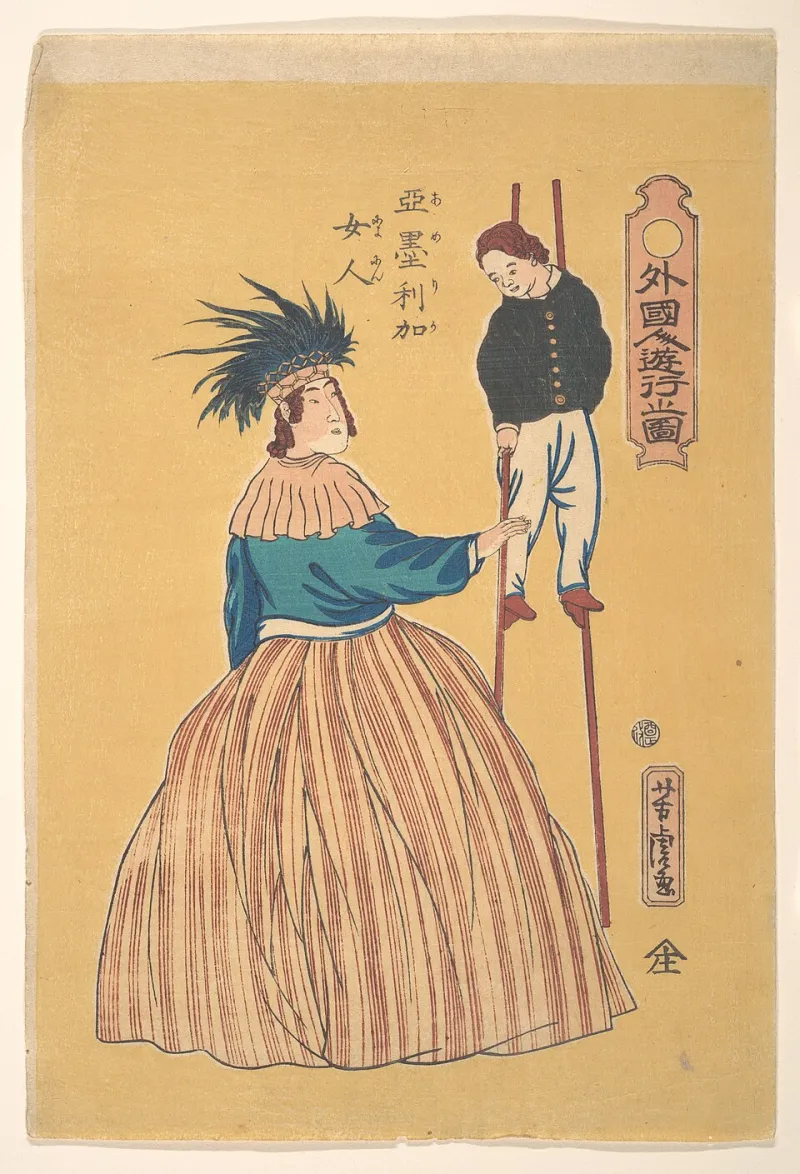
Photo: Utagawa Yoshitora, Public domain, via Wikimedia Commons
There's a specific kind of power move happening on your For You page right now, and you might have scrolled past it thinking it was just someone eating noodles. Look closer. The creator is mid-bite into a bowl of bun bo hue, narrating the dish's origins between slurps, laughing at a comment someone left about how "brave" they are for eating something "so weird." They don't flinch. They just keep eating — deliberately, joyfully, on their own terms.
This is the new mukbang. And it belongs to Asian-Americans now.
From Seoul to Your Screen — With a Detour Through the Diaspora
Mukbang — the Korean portmanteau of meokda (eating) and bangsong (broadcast) — exploded out of South Korea around 2010, born from a culture grappling with loneliness and the ritual of communal meals. By the mid-2010s it had landed hard in the US, mostly filtered through the lens of spectacle: giant portions, ASMR sounds, and the vague sense that watching someone eat obscene quantities of food was either deeply comforting or deeply unsettling, depending on your mood.
For a while, the American version of mukbang was dominated by a pretty narrow cast of characters — creators who leaned into shock value, extreme consumption, and a kind of detached performance of appetite. The food itself was almost incidental. A vehicle for views.
Then Asian-American creators started showing up and doing something different. They brought the food back to the center — and brought themselves with it.
The Heritage Flex Nobody Saw Coming
Ask any second-gen Asian-American about their relationship with their family's food and you'll hear some version of the same story: the embarrassment of a school lunch that smelled "too strong," the code-switching between home flavors and cafeteria-safe sandwiches, the slow and sometimes painful journey back to actually owning those flavors as an adult.
Mukbang, it turns out, is a weirdly perfect vehicle for that reclamation arc.
Creators across TikTok and YouTube are now building entire content identities around heritage cuisines — not as an exotic curiosity for outside audiences, but as something that simply is. Filipino creators eating dinuguan and talking about why the "it looks like mud" comments stopped bothering them years ago. Vietnamese-American creators doing full ASMR breakdowns of bánh cuốn while casually explaining the regional differences between their grandmother's version and the restaurant version. Korean-American creators making army stew and getting into the complicated colonial history of the dish without missing a single bite.
The food is the point. The context is the point. And the creator's comfort in their own cultural skin? Loudest point of all.
Body Image in the Chat
Here's where it gets real. One of the most persistent stereotypes attached to Asian bodies — particularly Asian women's bodies — is the expectation of smallness. Delicacy. The assumption that if you're Asian, you eat like a bird and look like one too. It's a stereotype that's been weaponized in both directions: fetishized in one breath, used to police and shame in the next.
Mukbang, when Asian-American creators own it fully, becomes a direct act of defiance against all of that.
Watching a Korean-American woman demolish a spread of tteokbokki and fried chicken while reading thirsty comments aloud and laughing — that's not just content. That's a statement. Watching a plus-size Filipina creator eat her lola's kare-kare and talk openly about diet culture in immigrant households while the comments flood with "this is healing me" — that's community building through the act of eating.
The comment sections on these videos tell their own story. Alongside the inevitable trolls are hundreds of messages from people saying they finally feel seen. That they grew up hiding their lunches and now they're watching someone eat that exact food on camera with zero apology, and something in them is quietly unknotting.
That's not a side effect of good content strategy. That's the whole point.
Authenticity vs. The Algorithm
It would be easy to frame all of this as purely organic and pure — creators just doing their thing, the internet responding with love. The reality is messier and more interesting.
Going viral as an Asian-American mukbanger often means navigating a recommendation algorithm that still seems genuinely confused about what to do with you. Do you get filed under "exotic food"? "ASMR"? "Cultural content"? The categories don't always fit cleanly, and creators talk openly about the weird experience of watching their videos perform differently depending on which corner of the internet catches them first.
There's also the monetization question. Brand deals for food creators tend to skew toward mainstream snack brands, fast food partnerships, and products that fit a very particular American consumer image. Asian-American mukbangers are increasingly pushing back on this — some explicitly, by only partnering with Asian-owned food brands or brands that actually align with their content, others more quietly by simply refusing deals that feel like they're asking the creator to dilute what makes their channel theirs.
A few have started building alternative revenue streams entirely — Patreon communities, recipe collaborations, even pop-up dining events that bring their online audiences into physical space around a shared meal. The table gets bigger. The creator stays in control.
"We're Not the Trend — We're the Template"
One creator, a Chinese-American based in Los Angeles who built her following through videos of her cooking and eating her grandmother's Sichuan recipes, put it simply in a video that's been screenshotted and reshared probably more times than the original view count suggests: "I'm not doing mukbang. I'm doing what my family does every Sunday. I just turned the camera on."
That reframe matters. A lot of the conversation around Asian-American mukbang still positions it as a response — to Western beauty standards, to algorithmic bias, to cultural erasure. And sure, all of that context is real and worth naming. But the most exciting thing happening in this space right now is creators who aren't primarily interested in responding to anything.
They're not making content for the person who thinks their food is weird. They're making it for the person who grew up eating that food and never saw it treated like it was worth celebrating. They're making it for themselves, honestly — and inviting everyone else to pull up a chair.
The Table Is Set
Mukbang started as a way to feel less alone while eating. In the hands of Asian-American creators, it's become something bigger: a space where food is heritage, appetite is politics, and showing up on camera mid-bite is its own kind of manifesto.
Your algorithm will catch up eventually. Until then, go find these creators. Watch them eat. Read the comments. You'll understand pretty quickly that none of this was ever really about the food — and that it was always, entirely, about the food.
Both things are true. That's the whole vibe.