Swipe Left on Their Fantasy: Asian-American Women Are Done Playing the Role You Cast Them In
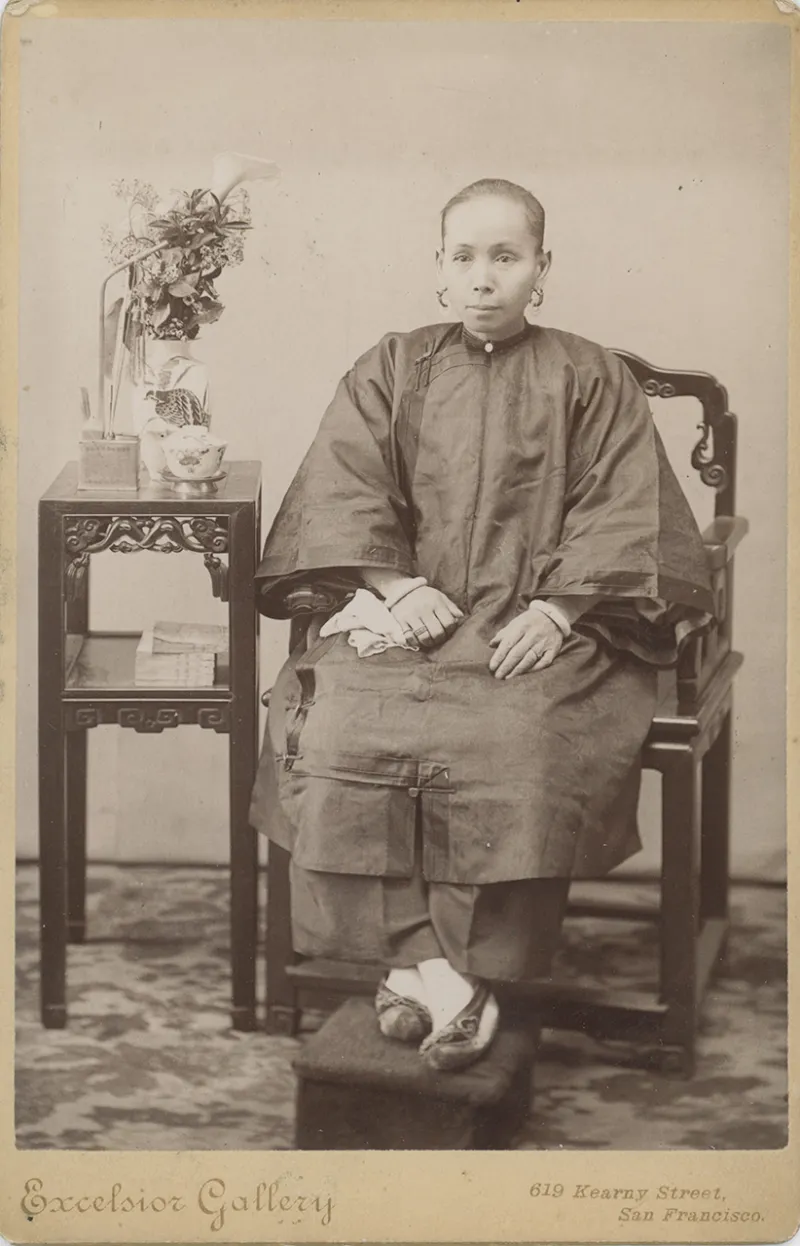
Photo: Unknown, Public domain, via Wikimedia Commons
There's a particular kind of exhaustion that comes with opening a dating app when you're an Asian-American woman. It's not just the usual swipe fatigue. It's the weight of knowing that somewhere in your match queue, there's a guy who thinks he's complimenting you when he says he's "always been into Asian girls." That he thinks that's a green flag. That he has no idea why it isn't.
For years, the cultural expectation — unspoken but loud — was to absorb it, deflect it gracefully, maybe laugh it off. The "model minority" script doesn't stop at academic achievement or career trajectory. It bleeds into romance, into desirability politics, into the quiet pressure to be palatable enough for mainstream attraction while still being "exotic" enough to be interesting. It's an impossible position, and Gen Z Asian-American women, in particular, are increasingly refusing to hold it.
The Myth of Being "Easy to Date"
The fetishization of Asian women in American dating culture isn't new — it has deep, ugly roots in U.S. military history in Asia, in Hollywood's long tradition of casting Asian women as submissive accessories to white male protagonists, in the persistent "Lotus Blossom" trope that flattens an entire spectrum of human complexity into a single, convenient fantasy. What is new is how openly young women are naming it, dissecting it, and refusing to accommodate it.
On TikTok, threads unpacking "yellow fever" and its psychological mechanics rack up millions of views. Subreddits and Discord servers dedicated to Asian-American dating experiences have become spaces where women compare notes, share screenshots of cringe-worthy openers, and build collective language around experiences that used to feel too niche — or too uncomfortable — to articulate publicly.
"I used to think something was wrong with me when guys would say weird stuff about my ethnicity like it was a compliment," says one 24-year-old Korean-American woman from Los Angeles who asked to go by her first name, Mina. "Now I just unmatch immediately. I don't owe anyone an explanation."
That shift — from self-doubt to clarity — is showing up in how Asian-American women are building their dating profiles, choosing their platforms, and filtering their matches.
Profile as Manifesto
If the old playbook involved softening yourself to appeal to the broadest possible audience, the new one is almost deliberately the opposite. More and more Asian-American women are writing bios that function less like introductions and more like litmus tests.
Explicit callouts — "not interested in anyone who has a 'thing' for Asian women" — are becoming common. So are cultural references designed to weed out people who are only interested in a surface-level version of Asian identity. Profiles written partially in Korean, Japanese, Tagalog, or Mandarin. Mentions of specific regional cuisines, not just vague nods to "loving Asian food." References to artists, films, or cultural moments that require actual familiarity to recognize.
The logic is simple: if it scares off someone who was only attracted to a projection, that's the point.
Some women are going further, gravitating toward apps and communities built specifically with Asian-American daters in mind. Platforms like Subtle Asian Dating — which grew out of the viral Facebook group — or niche Discord communities aren't just logistical alternatives. They represent a philosophical shift: the idea that you deserve a space where your cultural context is the default, not a novelty.
Colorism Is in the Room, Too
Any honest conversation about Asian-American women and dating has to reckon with colorism — the internal hierarchy within Asian communities that privileges lighter skin, and the way that hierarchy intersects with and amplifies Western beauty standards.
Darker-skinned South Asian, Southeast Asian, and Filipino women navigate a particularly layered set of pressures: fetishized by some, rendered invisible by others, and often positioned at the bottom of desirability rankings that operate both inside and outside their own communities. The "model minority" fantasy, it turns out, has a very specific face — and it isn't theirs.
This is a conversation that's gaining real traction in Asian-American digital spaces. Content creators from Vietnamese, Thai, Indian, and Filipino backgrounds are pushing back against the idea that "Asian" is a monolith, and that the experiences of East Asian women represent the whole picture. The reclamation happening in dating culture isn't just about rejecting white fetishization — it's also about dismantling the hierarchies that exist within the community itself.
"I'm Filipina and Brown, and I've had Asian guys tell me I'm 'not their type' because I'm too dark," says Diane, a 22-year-old from the Bay Area. "And then I've had white guys fetishize me in a completely different way than they fetishize my East Asian friends. It's like you can't win from any direction. So I stopped trying to win and started just filtering for people who actually see me."
Desire on Their Own Terms
What's emerging isn't just a rejection of bad behavior — it's a genuine, generational reimagining of what Asian-American women are allowed to want from romantic relationships.
That means being vocal about attraction rather than just responsive to it. It means dating across racial lines without apologizing for it, and dating within Asian communities without being accused of self-segregation. It means calling out the "she only dates white guys" or "she only dates Asian guys" commentary for what it is: a way of policing women's choices by framing them as political statements rather than personal ones.
It also means engaging with the complicated, sometimes contradictory feelings that come with navigating race and romance in America. There's no clean resolution here — no app feature or bio tweak that makes the underlying cultural baggage disappear. But there's something meaningful in the refusal to pretend it doesn't exist.
The "model minority" myth has always demanded a kind of performance: be exceptional, be gracious, be non-threatening. In dating, that translated to being desirable on other people's terms, absorbing discomfort without complaint, and treating your own cultural identity as a selling point rather than a full, complicated reality.
The women opting out of that performance aren't doing it perfectly or uniformly. Some are exhausted. Some are still figuring it out. But the collective move toward honesty — in profiles, in conversations, in the communities they're building — is something different from what came before.
It's not a trend. It's a long-overdue correction.
And if that makes someone swipe left? Good. That was always the point.