Netflix Can't Hold Us: The Rise of Asian-American-Built Streaming Spaces
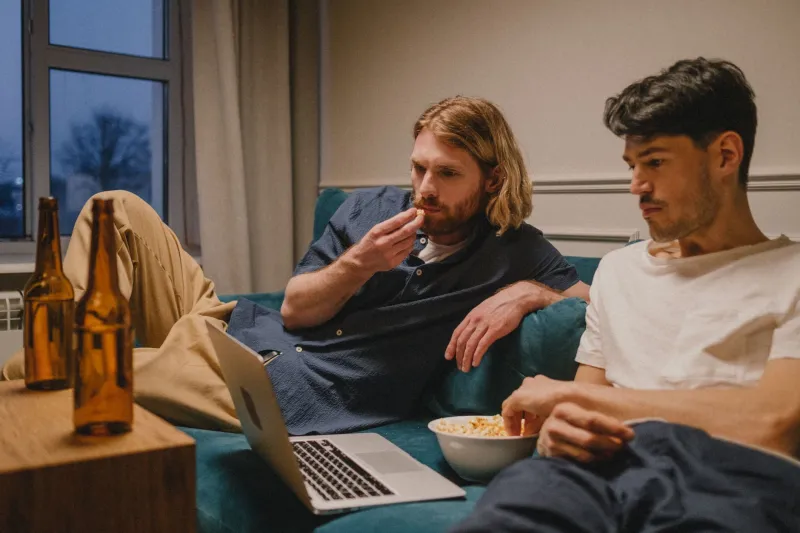
There's a specific kind of frustration that comes from opening Netflix, scrolling for twenty minutes, and landing on the same four Asian-coded titles the algorithm has been pushing at you since 2021. You've already watched them. You recommended them to your mom. You wrote a Twitter thread about them. And yet here they are again, dressed up like a discovery.
For a lot of Asian-American viewers, that loop — the illusion of choice wrapped around a very narrow selection — stopped feeling acceptable a while ago. And some of them didn't just log off in annoyance. They started building something else entirely.
The Algorithm Doesn't Know You Like That
Let's be honest about what mainstream platforms are actually optimizing for. It's not your cultural specificity. It's engagement metrics, licensing deals, and whatever a focus group in Burbank decided counts as "diverse content" this quarter. The result is a kind of flattening — where a Thai thriller, a Japanese family drama, and a Korean romcom all get shelved under the same generic "Asian" category, recommended interchangeably, as if the audiences for each are identical.
Jenny Pak, who co-founded a Discord-based streaming club out of Los Angeles that has grown to over 4,000 members, describes the problem bluntly: "The algorithm treats us like we're one monolith. Like if you watched Squid Game, you obviously want to watch every single piece of Asian content ever made. That's not curation. That's just lazy."
Her community, which started as a group chat during the pandemic, now runs weekly synchronized watch parties, maintains a community-voted recommendation database, and hosts live subtitle critique sessions where members — many of them bilingual — fact-check and improve on the official translations. It's informal infrastructure, but it functions like a platform.
The Niche Services Filling the Gaps
Beyond community-run clubs, a small but serious ecosystem of independent streaming services has been quietly building out. Some are well-established: Viki has been around for years, powered largely by volunteer fan translators who care deeply about getting the nuance right. RetroCrush carved out a lane for classic anime. Mubi pulls in arthouse Asian cinema that Hulu would never touch.
But newer entrants are getting more specific. There are subscription services focused exclusively on Southeast Asian content — Filipino indie films, Vietnamese web dramas, Indonesian horror — genres and regions that the big streamers have essentially ignored. There are creator-run channels on YouTube and Patreon that function like curated micro-networks, where a single host with deep knowledge of, say, Taiwanese New Wave cinema builds a loyal subscriber base by just being genuinely good at what they do.
David Nguyen, a Vietnamese-American film programmer based in Houston, runs one of these. His Patreon-supported channel covers Southeast Asian cinema with the kind of contextual depth that no mainstream platform bothers with. "I do filmmaker background, historical context, sometimes I'll bring in a guest who grew up watching these films," he says. "People are paying for the education as much as the content."
Speed, Subtitles, and the Community That Moves Faster Than Netflix
Another major driver pushing viewers toward alternatives is timing. Netflix's release model for international content — often dropping an entire Korean drama season months after it aired in Korea — feels almost insulting to fans who've been following the show in real time through fan subbing communities.
Fan subbing exists in a legal gray zone, but its cultural value is undeniable. Groups of dedicated volunteers, sometimes producing subtitles within hours of an episode airing, have kept diaspora audiences connected to content their families back home are watching live. The subtitles are frequently better — more attuned to slang, regional dialects, and the kind of cultural footnotes that automated translation just doesn't catch.
"Official subs will translate a Korean expression as something that technically means the same thing in English but loses everything about why it's funny or meaningful," says Mia Chung, a college student in New York who has been part of a fan subbing team for three years. "We care about getting it right because we actually care about the show."
That care — the emotional investment of people who are part of the culture, not just processing it for a global market — is what keeps these alternative spaces alive even as the big platforms pour billions into content.
Liberation or Fragmentation? Probably Both.
Here's the tension nobody fully resolves: building your own space is empowering, but it also lets the mainstream off the hook. If Asian-American audiences retreat into their own platforms, does that reduce the pressure on Netflix and Hulu to actually do better? Does fragmentation serve the community, or does it quietly reinforce the idea that this content is niche, supplemental, not for everyone?
Jenny Pak pushes back on the either/or framing. "We're not leaving the mainstream. We're adding something the mainstream can't give us. There's no reason I can't have both."
That might be the most honest take. The goal was never to burn Netflix down. It was to stop being dependent on it for cultural sustenance. When your community builds the infrastructure — the watch parties, the better subtitles, the recommendation engines built by people who actually know the difference between a Makoto Shinkai film and a Saturday morning anime — you're not fragmenting. You're filling in what was always missing.
What These Spaces Actually Feel Like
Spend any time in these communities and the vibe is immediately different from scrolling alone on a couch. There's conversation. There's argument. Someone's mom just watched her first K-drama and has seventeen questions. Someone else is mad about a subtitle choice and has receipts. A college student in Ohio found out a Filipino indie film she watched in her parents' living room as a kid is being screened by a virtual community she just joined.
That texture — the social layer, the shared context, the sense that you're watching with people who get it — is what no streaming algorithm has figured out how to replicate. And honestly, it probably can't. That's a human thing.
The platforms being built by and for Asian-American audiences aren't just alternatives to Netflix. They're arguments about what watching together can actually mean. And that argument, it turns out, is way more interesting than anything in the recommended queue.