From Harajuku to Your Hometown: The Unstoppable Takeover of Japanese Street Style in American Fashion
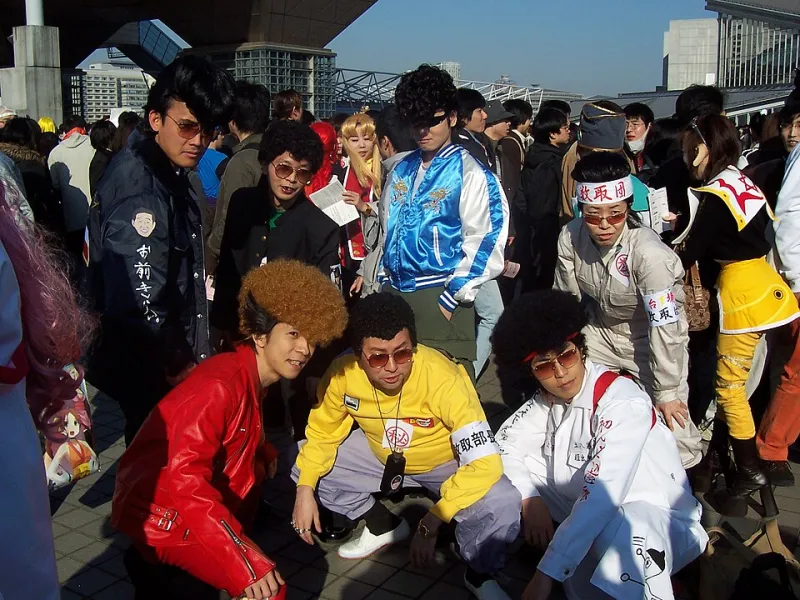
Photo: Mike, CC BY-SA 2.0, via Wikimedia Commons
If you've ever stood in line for a sneaker drop, layered a vintage flannel over a graphic tee with deliberately mismatched proportions, or paid an embarrassing amount of money for a plain white t-shirt because of the brand sewn into the tag—you've been living inside a design philosophy that has Japanese roots running deeper than most people realize.
American streetwear didn't emerge from a vacuum. It was shaped, filtered, and fundamentally transformed by decades of Japanese street style innovation. And understanding that lineage isn't just a history lesson. It explains why the aesthetic still hits the way it does.
The Sidewalk as Runway: Harajuku Before It Was a Punchline
Before Gwen Stefani made it a pop culture reference point and before it became a tourist photo op, Harajuku—specifically the stretch of Takeshita Street and the surrounding blocks—was something genuinely wild and homegrown. Starting in the late 1970s and accelerating through the 80s and 90s, Tokyo's youth were developing visual languages that had no Western equivalent.
Decora, Visual Kei, Lolita, Gyaru—these weren't costumes. They were complete aesthetic philosophies, each with its own internal logic, community codes, and rules about what signified membership. The maximalism was intentional. The commitment was total. And the DIY ethos running underneath all of it—the idea that you could construct your own identity entirely through what you wore—was radical in a way that still resonates.
Fashion photographers and editors started making pilgrimages to document what was happening on those streets. Magazines like FRUiTS, launched in 1997 by photographer Shoichi Aoki, became bibles for anyone paying attention globally. The images that circulated—impossibly layered outfits, clashing patterns, platform boots and bleached hair—looked like nothing else anywhere in the world.
Ura-Harajuku and the Birth of the Hype Economy
While the Takeshita Street scene was doing maximalism, a parallel movement was developing in the backstreets of Harajuku—the area known as Ura-Harajuku, or 'Back Harajuku.' And this one would go on to directly construct the DNA of American streetwear as we know it.
Designers like Hiroshi Fujiwara, Nigo, and Jun Takahashi were operating small, deliberately hard-to-find boutiques selling limited quantities of meticulously considered clothing. The scarcity was architectural—not a marketing trick but a philosophical position about the relationship between objects and meaning. When everything is available to everyone, nothing carries weight. When you have to find something, when only a few people have it, the object becomes a marker of belonging and taste.
Nigo's A Bathing Ape (BAPE) took this logic and ran it into global consciousness. The camo patterns, the shark hoodies, the Baby Milo graphics—all of it operated on a frequency that American hip-hop culture immediately recognized and absorbed. By the early 2000s, Pharrell was wearing BAPE on MTV. Lil Wayne was referencing it in lyrics. The pipeline from Ura-Harajuku boutique to American cultural currency was fully operational.
And then there's the James Jebbia connection. Supreme, which has become arguably the most influential streetwear brand in American history, was founded in New York in 1994 but was deeply informed by what Jebbia observed happening in Tokyo. The limited drops, the box logo minimalism, the cultivation of a community that felt like a secret worth keeping—all of it rhymes with what Fujiwara and Nigo were doing in those backstreets.
The Collab as Cultural Exchange
One of the mechanisms through which Japanese aesthetics embedded themselves permanently into American streetwear was the collaboration model. Supreme x Comme des Garçons. Nike x Undercover. Adidas x Yohji Yamamoto's Y-3. These weren't just product launches—they were cultural negotiations, each one introducing a Japanese design sensibility to an audience that might not have sought it out otherwise.
Virgil Abloh, whose influence on American streetwear is immeasurable, was openly vocal about the debt his work owed to Japanese designers. The deconstruction, the quotation marks around familiar objects, the elevation of workwear into high fashion—all of these moves had been executed by designers like Rei Kawakubo and Yohji Yamamoto years before they became the vocabulary of Off-White.
For collectors and stylists who've been watching this space, the collab model is still where the most interesting cultural conversations happen. 'When a Japanese brand and an American brand come together, you can usually see which one is doing the more interesting design thinking,' says one LA-based stylist who's been collecting Japanese streetwear pieces for over a decade. 'And it's almost always the Japanese side pushing the concept further.'
The Asian-American Bridge Generation
Here's where the story gets particularly relevant for a site like Buchiki: the conduit through which Japanese street style became American street culture has often been Asian-American communities. Second-generation Japanese-American, Korean-American, and Chinese-American kids who grew up with access to both worlds—who had family sending them magazines and pieces from Tokyo, who understood the references without needing them explained—were early adopters and amplifiers.
This bridge generation is now producing designers, stylists, and brand founders who are doing something genuinely new: synthesizing the Japanese design philosophy they grew up revering with their specific American experience. Brands like Rowing Blazers (which has collaborated with Japanese labels), or the wave of Asian-American designers coming out of Parsons and RISD with collections that explicitly engage with their heritage, are building something that doesn't fit neatly into either the 'Japanese fashion' or 'American streetwear' category.
That's not a problem. That's the whole point.
Why the Influence Isn't Going Anywhere
Some trends are cyclical. Japanese street fashion's influence on American youth culture is something closer to structural. It rewired how an entire generation thinks about clothing—as communication, as community, as craft. The idea that a garment can carry meaning beyond its function, that scarcity and context matter, that the story of an object is part of the object itself—these are Japanese streetwear ideas that are now just how American streetwear works.
Walk into any hypebeast's closet in any American city and you'll find pieces that trace back to a Ura-Harajuku boutique, a Harajuku street snap, or a collab that started because a Japanese designer respected what an American brand was doing and wanted to push it somewhere new.
The influence is baked in. And honestly? It's made American fashion more interesting, more thoughtful, and more willing to treat getting dressed as a genuine creative act.
That's a trade we'll take every time.